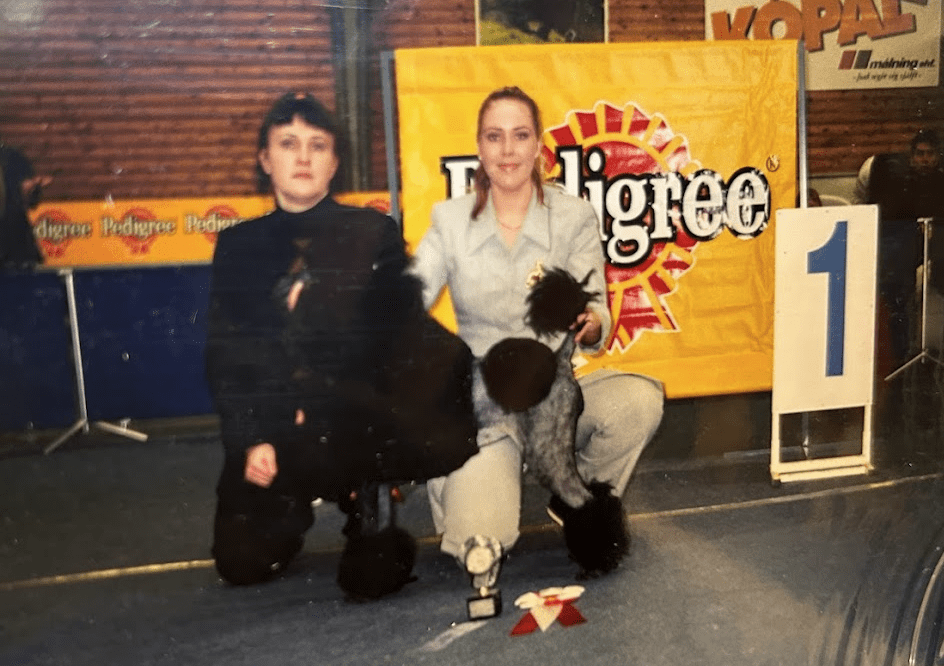
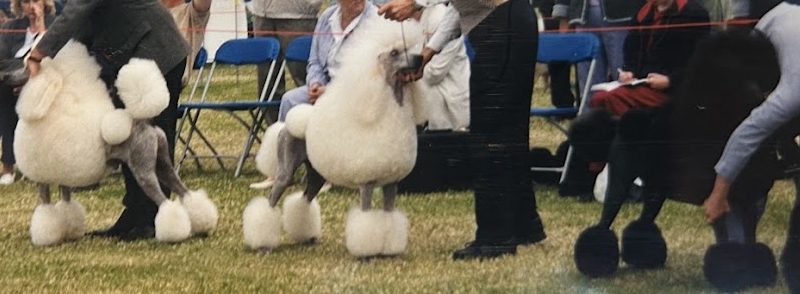
Recently I have been looking closer at Poodles and their standard again, something made me stop scrolling: Tri-coloured Poodles in FCI rings. Black and white. Brown and white. Phantom markings. For as long as I had known the breed, an FCI Poodle was a solid-coloured dog, full stop — a white patch on a black dog was a fault you noticed from across the ring. Suddenly there they were, being shown and placed. The pictures were taken at a dog show in the UK 30 years ago and show black and white standard poodle. The picture of top is me showing Athar.

What actually changed
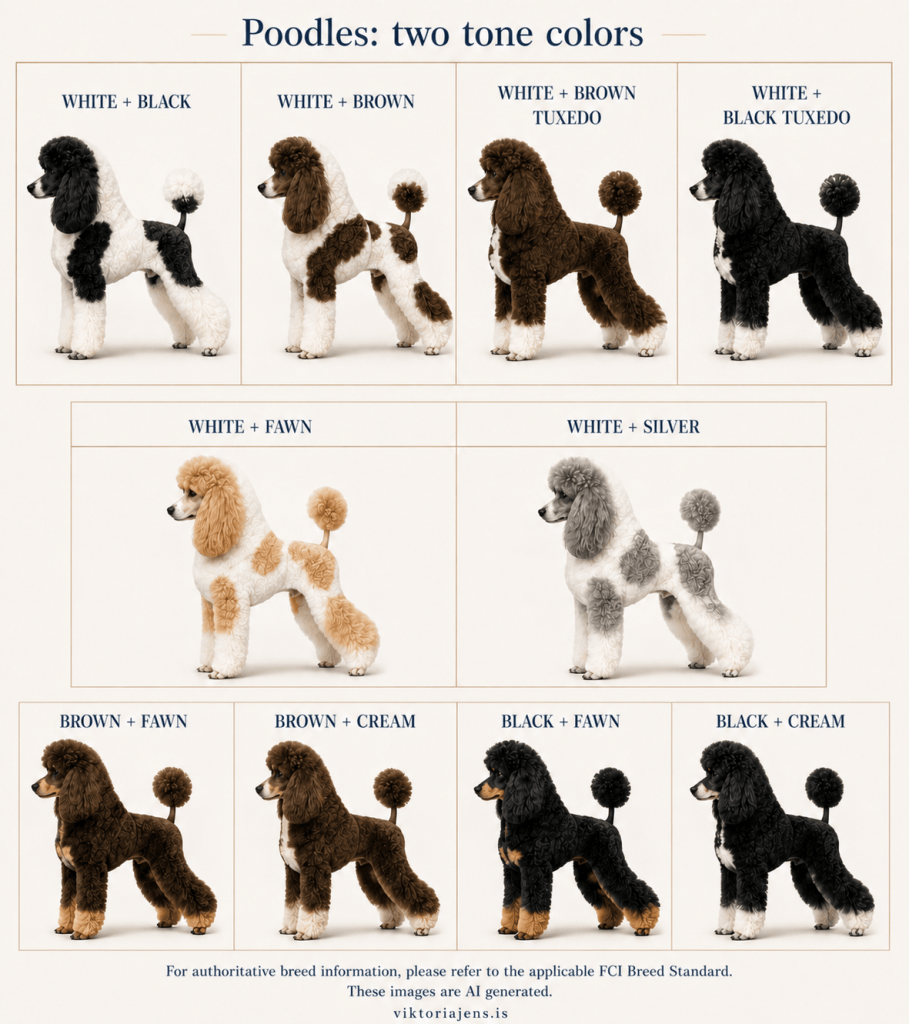
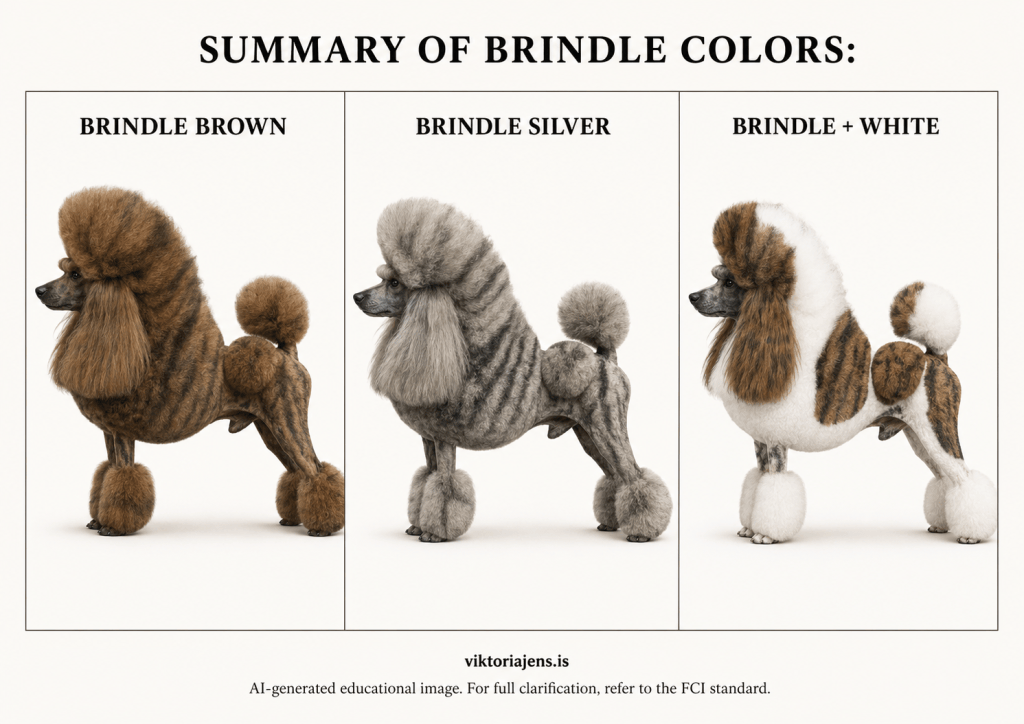
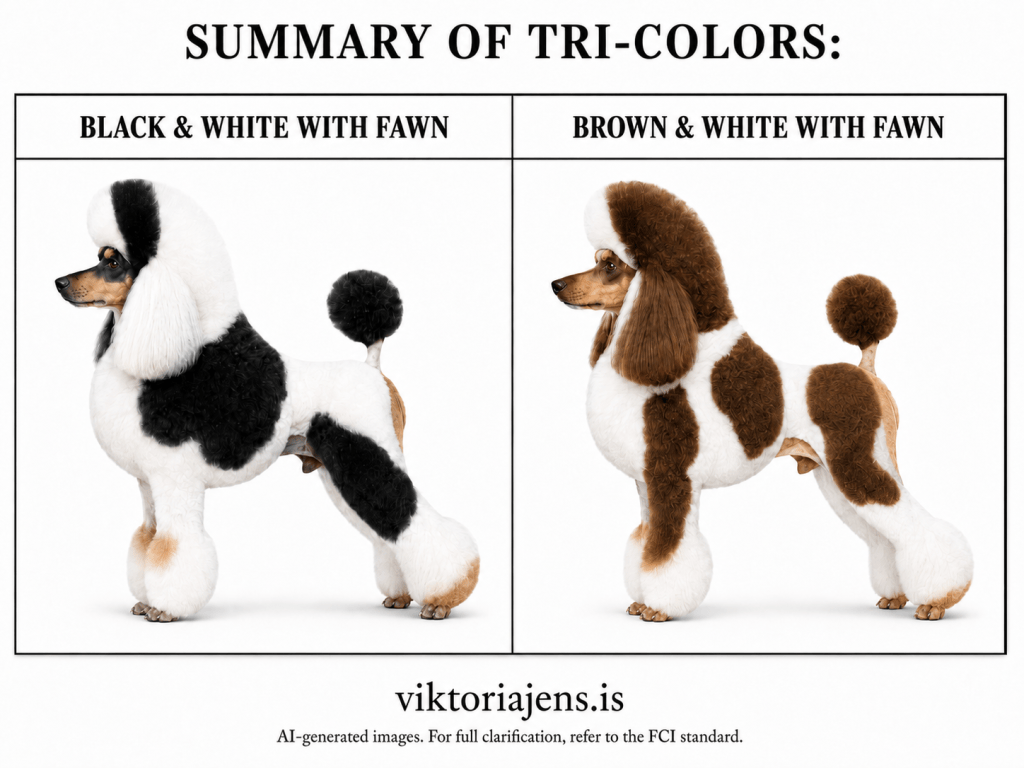
In 2024 the FCI revised the Poodle standard (N°172), and the revision took effect on 1 August 2024. It added a new variety — “Other colours” — across all four sizes. Under it, parti-coloured dogs (black and white, brown and white, grey and white, fawn and white), tricolour, and brindle and white can now be shown, provided the colour distribution is harmonious. Mismarked dogs still fail, and a stray white marking on a solid-coloured dog is still highly undesirable — the solids’ rules did not loosen. What changed is that a whole class of dogs that used to be excluded from FCI rings entirely now has its own place in them.
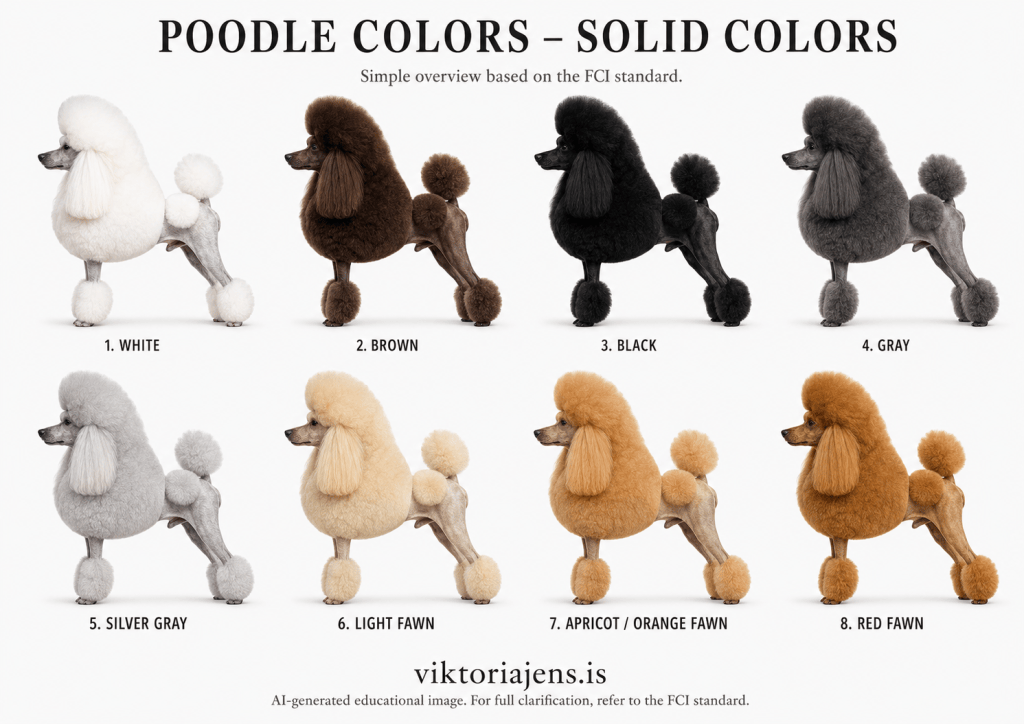
Since I was curious how this could look liked, I asked ChatGPT to formulate the colors in – please always refer to the standard.
Why — at least as far as I can tell
This is the part I found most interesting, and I offer it as what I have pieced together from reading rather than as inside knowledge. The change was driven from France, the breed’s country of origin, by the French Poodle club. Their argument, as I understand it, was not that the breed should become something new — it was that solid colours are the recent invention. Look at paintings and records from the fourteenth to the nineteenth century and the parti-coloured Poodle is everywhere; the solid-only Poodle is largely a product of the show ring standardising taste. Framed that way, the 2024 change reads less like a modernisation and more like a restoration.
I can’t vouch for every detail of that history — I’m still reading — but I find the shape of the argument fascinating either way.
One breed, several rulebooks
What makes this genuinely confusing for anyone moving between registries: the change is FCI-only. The American Kennel Club still disqualifies parti-coloured Poodles from conformation, and the UK Kennel Club standard still calls anything other than a solid colour unacceptable. So the same dog can be a legitimate show prospect in Denmark and a disqualification in New York. If you breed, buy, or show across registries, the colour on the pedigree now means different things depending on which rulebook you open.
Why this stayed with me
The lesson I took from the whole rabbit hole is not really about colour. It is that a breed standard is a living document with a history.
The views expressed here are my own. Judges and breeders should always refer to the FCI breed standard as the authoritative reference.
 Viktoría Jens
Leave a comment